
Ham Lake, MN · Garage Door Service
Garage Door Repair in Ham Lake, MN
Garage door repair for Ham Lake homes built 1960-2003, where cold-climate spring wear and original hardware are the most common calls we get.
- Repairs & new doors
- Springs & openers
- Serving 7 nearby communities
How Long It Takes
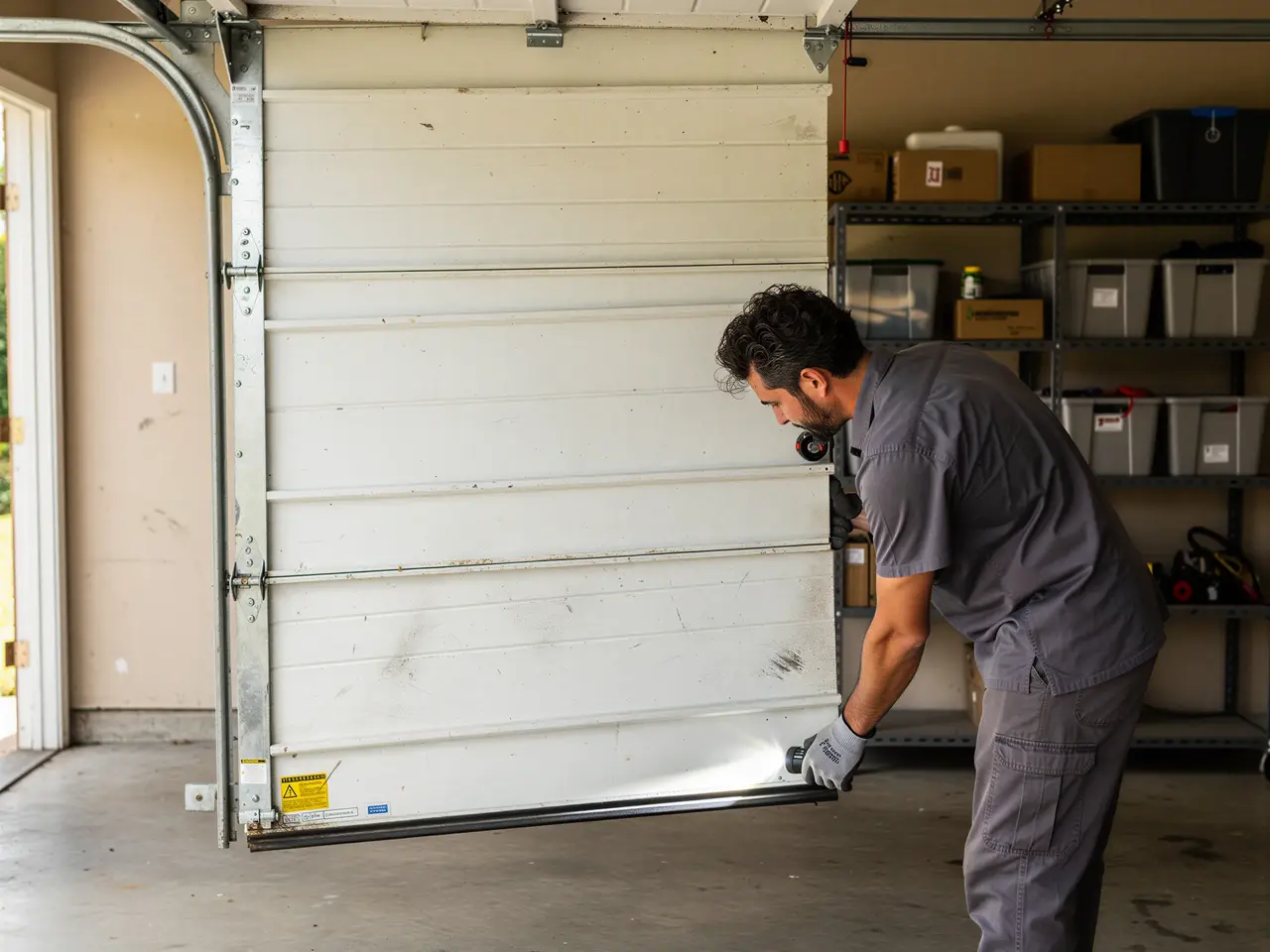
Most repair calls in Ham Lake are a torsion spring, a cable, or an opener that's stopped talking to the wall switch. Once we're on site, a spring swap or cable replacement on a standard double door usually runs under two hours. What stretches a job is parts. A lot of Ham Lake houses date to the 1984 median build year in this area, and some of the doors and track hardware on those houses are old enough that the matching drum, bearing plate, or opener logic board isn't something we carry on the truck every day. If your door is original to a house built in the 1960s-1980s range, tell us the symptom and the approximate age when you call, so we can bring the right spring size the first time instead of a second trip.
We won't quote you a repair time before seeing the door. A bent track from backing into it is a different job than a snapped cable, even though both can leave the door stuck halfway. What we can tell you is that same-day diagnosis is normal; same-day parts aren't always, especially on older hardware.
The Symptom
The call we get most in Ham Lake starts the same way: the door won't open, or it opens a few inches and stalls, and there's a loud bang that happened right before it quit. That bang is almost always a torsion spring letting go. On a double-car door, when one spring breaks the opener tries to lift the full weight of the panel on the remaining spring and either can't do it or strips the gear trying.
The second most common symptom is a door that reverses itself coming down, or that drifts back up a few inches and stops. That's usually the opener's force setting fighting a spring that's lost tension over the years, not a dying opener. Cold makes both worse. In a severe cold climate like this one, steel contracts, grease in the bearings stiffens, and a spring that was marginal in October gives out the first hard freeze. We see the pattern shift every winter.
The DIY Question
A torsion spring is wound under enough tension to break a bone or worse if the winding bars slip, and that doesn't change because you watched a video first. We'll say plainly: don't touch the spring, the cables, or anything under tension yourself. That's not a sales line, it's the one job on a garage door that puts people in the ER.
There's plenty you can do safely. Check that the track bolts are tight, that the photo-eye sensors near the floor are clean and aligned, and that the door balances roughly evenly by hand with the opener disconnected. If the door is heavy on one side or won't stay put when you pull the release, that's spring tension doing the work, or failing to. Lubricating rollers and hinges with a garage-door-specific lube (not WD-40, which washes grease out) is fine and worth doing twice a year here given how hard the cold is on moving metal parts.
Why This Fails Locally
Ham Lake's housing stock mostly went up between 1960 and 2003, with a lot of it concentrated in the 1980s and 90s, same as the other 31 named areas around here. Doors and openers from that era weren't built for a 40-year service life, and a severe cold climate shortens that further. Steel springs lose temper faster when they're cycling through freeze-thaw swings every winter, and original one-piece doors from the earlier end of that build range often sit on side-mounted torsion hardware that newer parts don't bolt straight onto.
With 45,198 owner-occupied houses across this service area and a median household income around $100,011, we see a consistent pattern: people maintain the house but the garage door gets ignored until it fails, because nothing about it looks broken until it is. That's not unique to anyone's street, but it is why a 25-year-old spring on a Ham Lake door built in that era is living on borrowed time once a hard winter hits, more than it would in a milder climate.
Frequently asked questions
Why did my garage door spring break in the middle of winter?
Cold makes steel brittle and stiffens the grease in the bearing, so a spring that's already worn from age gives out under the stress of a cold start. We see a clear jump in spring-break calls here once the hard freezes set in, especially on doors installed in the 1980s and 90s.
Do you work on older torsion hardware, not just newer doors?
Yes. A lot of Ham Lake houses have original hardware from the 1960s-1980s build range, and we carry or source the older spring sizes and drum types that fit side-mounted torsion setups, not just current big-box door parts.
Is it ever cheaper to replace the door instead of repairing it?
Sometimes. If the panels are rusted or warped and the track is bent beyond adjustment, a repair just buys you a few more months. We'll tell you honestly when a repair isn't worth the money instead of patching something that's going to fail again.
How fast can someone come out for a stuck door?
We don't quote a fixed response window without knowing the symptom, since a broken spring and a bent track are different jobs. Call and describe what happened and we'll tell you what we can do same day versus what needs a follow-up visit for parts.
By Neighborhood
Garage Door Repair across the Ham Lake area
We also handle garage door repair in these Ham Lake-area suburbs.
Book garage door service in Ham Lake
Call now or request a quote - tell us what the door is doing and where you are.