
Ham Lake, MN · Garage Door Service
New Garage Doors Built for Ham Lake's 1960s-2000s Housing Stock
Garage door installation for Ham Lake homes built 1960-2003, matched to track and spring specs for Minnesota's severe cold instead of a one-size door.
- Repairs & new doors
- Springs & openers
- Serving 7 nearby communities
How Long It Takes
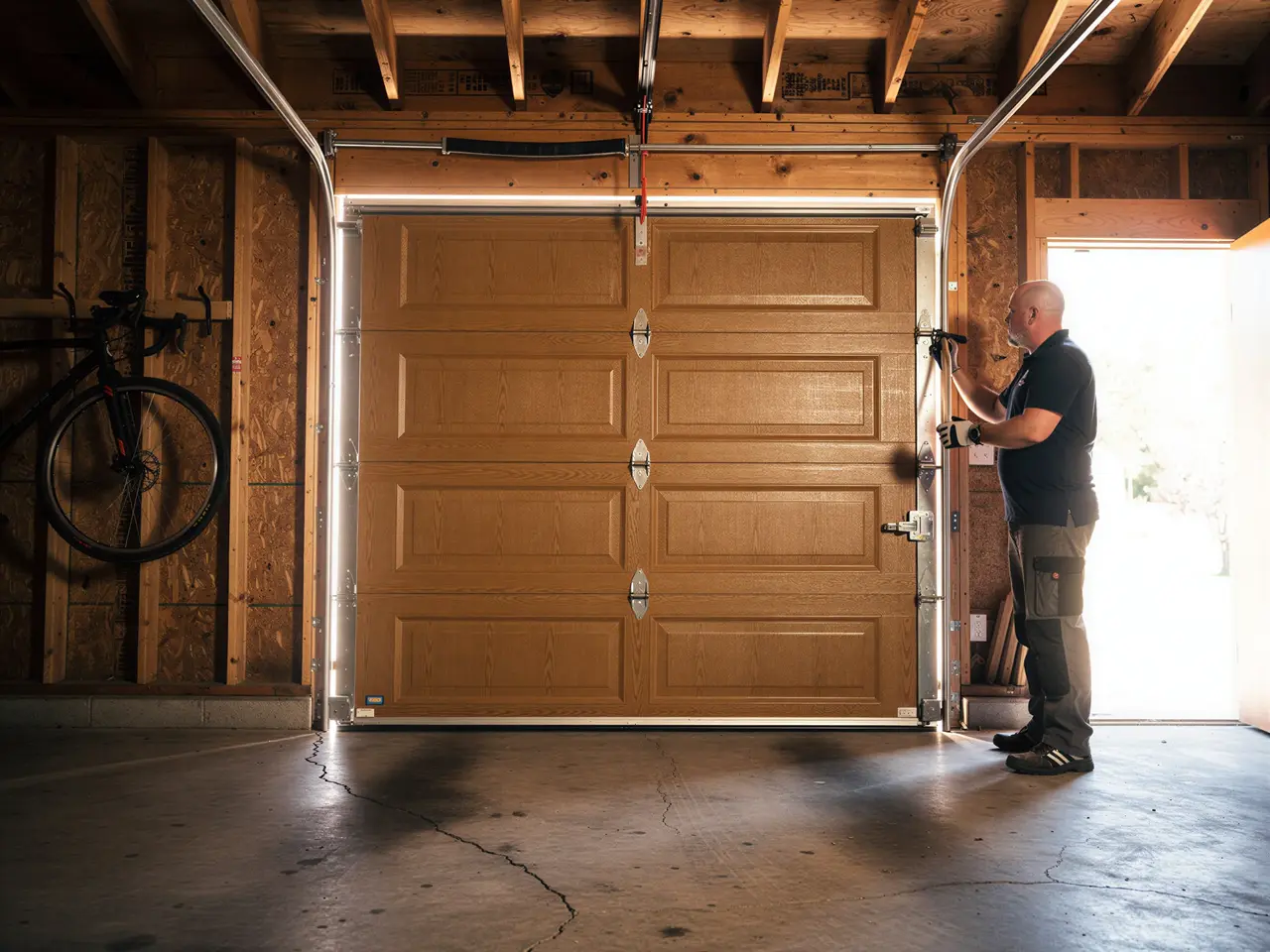
Installation day runs differently depending on what's coming out of your opening. Pulling a single, non-insulated steel door from a house built in the 1960s-80s range and setting a new insulated door on the same jamb is the simple version of the job. Add a header that's out of square, a track bent from decades of winter ice at the threshold, or a jamb that's rotted where old flashing failed, and the day gets longer before the new door goes up.
We don't quote a flat number of hours over the phone, because we haven't opened your header yet - we tell you after we look. What we can say: most of this gets done in one visit, in one day, because we carry standard torsion spring sizes and track hardware on the truck rather than special-ordering for an odd configuration.
The exception is a custom width or a door with insulation specs that need a factory order; that part isn't a same-day fix no matter who you call, and we'll tell you the real lead time once the order's placed rather than guess at it.
The Symptom
Most of Ham Lake's housing went up between 1960 and 2003, with the bulk from the 1980s and 90s. Doors from that era are single-layer steel, no foam core, hung on tracks sized for a lighter door than what's sold today. Twenty-plus winters of severe cold cycling the steel - contracting hard overnight, then thawing against a warm garage wall - work the roller stems loose and crack the bottom seal first.
You'll notice it as a door that shudders halfway up, a bottom panel that won't seat flush anymore, or a torsion spring that's lost enough tension that the opener strains on every cycle. None of that is actually an opener problem, even though the opener is what's straining and what gets blamed. It's the door and the spring sized for a house built around 1984, working against a Minnesota winter they weren't built to take forty years of.
The DIY Question
A torsion spring holds enough stored force to break fingers or worse if it lets go while you're unwinding it, and that risk doesn't scale down just because your door looks old and tired. Swapping a single panel or an opener bracket is reasonable weekend work for someone with the right clamps.
Setting a new door - squaring a track to a header that's shifted slightly over thirty or forty years, setting spring tension to match the new door's actual weight rather than the sticker weight - is a different job. Getting the tension wrong in cold weather is how people get hurt or crack a new panel the first time it closes hard in sub-zero air.
If you want to replace weatherstripping or tighten hardware yourself, that's fine and we'll walk you through it on the phone. Full door-and-track installation, we do in person - that line doesn't move no matter how handy you are.
Why This Fails Locally
This isn't a problem that shows up the same way everywhere. A severe cold climate paired with housing stock that's mostly thirty to sixty years old means the two things that fail - steel fatigue and spring tension loss - happen together, on a predictable schedule, across Ham Lake and the towns around it like Columbus and Circle Pines.
A door installed when a house was built around 1984 is now at or past the point where the spring, the rollers, and the insulation are all original, out of sync with current door weights and R-values, at the same time winter asks the most of them.
With median household income here over $100,000 and most houses owner-occupied, a lot of homeowners are weighing a clean replacement against another round of patch repairs - and once the steel's fatigued and the track's been reset twice, replacement usually costs less over five winters than the string of spring and roller calls that come with keeping the original door running.
Frequently asked questions
How old does my garage door have to be before replacement makes more sense than repair?
If your house was built in the 1960s through the 1990s - common across Ham Lake - and the door's never been replaced, you're likely on the original spring and rollers. Once a torsion spring's lost tension and the bottom seal's cracked from repeated cold cycling, you're usually looking at spring, roller, and seal work all at once. At that point a new insulated door usually costs less over a few winters than three separate repair calls.
Will a new door fit my existing opener?
Often yes, if the opener's in good shape and rated for the new door's weight. We check horsepower and rail length against the new door's actual weight before we commit to reusing it. If the opener's old enough that it's not rated for a heavier insulated door, we'll tell you before the install, not after it starts straining.
Do you install custom-width or non-standard doors?
We can, but anything outside a standard width or height goes on factory order rather than coming off the truck, so it's not a same-day job. We'll give you the real order and lead time once we've measured your opening, rather than guess at it over the phone.
Book garage door service in Ham Lake
Call now or request a quote - tell us what the door is doing and where you are.