
Ham Lake, MN · Garage Door Service
Garage Door Repair and Tune-Ups for Ham Lake Homes
Ham Lake Garage Door Pros repairs and services doors on 1960s-2000s homes built for cold Minnesota winters, with calls for springs, openers, and tracks.
- Repairs & new doors
- Springs & openers
- Serving 7 nearby communities
How Long It Takes
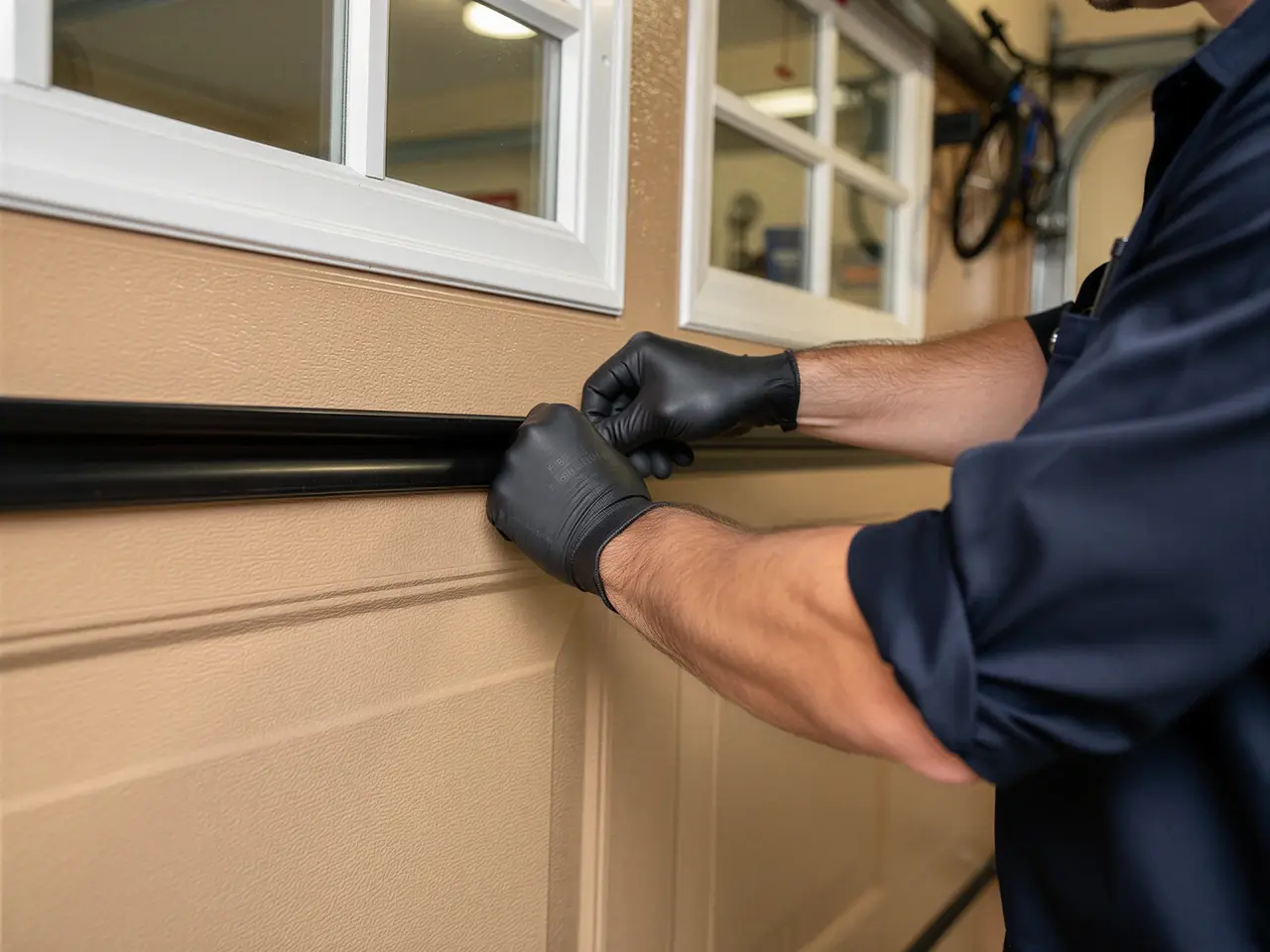
A straightforward service call, spring adjustment, roller swap, or opener reset, usually runs under an hour once we're on site. What changes the timeline is the drive and the part. Ham Lake sits close to a cluster of nearby towns, Columbus is 4 miles out, East Bethel 7, Circle Pines 8, so most calls in this corner of the service area don't eat the day in travel. The bigger variable is parts. Homes here were mostly built between 1960 and 2003, with the typical house dating to 1984, which means a lot of original hardware sized to specs that aren't on every truck. If your door still has its factory torsion spring or an opener from that build era, we may need to confirm the size before we order, which can push a same-day job to a next-day finish. We'll tell you straight on the phone whether we expect to carry what your door needs or whether we need to check first. Nobody wants a truck rolling out twice for a part that should've been on it the first time.
The Symptom
The call we get most starts the same way: the door worked fine yesterday, and this morning it's heavy, slow, or won't budge past a foot off the floor. That's almost always a spring losing tension, not a motor problem, and it tends to show up right after a hard cold snap. Ham Lake falls in a cold-severe climate band, and steel springs lose coil tension faster in that kind of cold than people expect. Add in a door built to 1980s or 90s hardware standards, which describes a large share of the housing stock in this service area, and you get springs that were already near the end of their cycle count getting pushed over the edge by a 20-below morning. The other version of this symptom is a door that reverses on its own partway down. That's usually the safety sensors, a known weak point on openers from that same build period, not a structural issue with the door itself. Either way, don't keep running the opener against a door that's fighting you. That's how a spring snap turns into a bent track too.
The DIY Question
We get asked this a lot, and the honest answer is: it depends which part. Swapping sensor eyes, tightening loose hardware, lubricating hinges and rollers, that's reasonable weekend work if you're comfortable with a ladder. A torsion spring is not. These are under enough stored tension to do real damage if the winding bar slips, and on a cold morning in this climate the steel is stiffer and more prone to snapping mid-adjustment than it would be in a warm garage. We won't talk anyone out of trying the small stuff. We will tell you flatly that spring work on a double door, especially an older torsion setup common to houses built here in the 1980s and 90s, is where DIY and a trip to the ER start to overlap. If you're not sure which category your fix falls into, send us a photo before you start. That costs you nothing and it's a lot cheaper than a replacement door panel.
Why This Fails Locally
This isn't a generic wear-and-tear story. Ham Lake's housing stock runs 1960 to 2003, with a median build year of 1984, and the surrounding service area, 31 named communities in all, matches that same pattern of mostly 1980s and 90s construction. That means a huge share of the doors we service are original or first-replacement units sized to hardware specs from that stretch, paired with openers that predate modern safety-reversal standards. Layer a cold-severe climate on top of that, and you get a predictable failure chain: steel springs that lose tension faster in deep cold, nylon rollers from that era that crack rather than flex below freezing, and lift cables that were never rated for forty winters of contraction and expansion. Across the roughly 45,198 owner-occupied houses in this service area, the ones built before the mid-80s are the ones generating the worn-roller and bent-track calls right now, not newer construction. It's less about bad luck and more about a housing stock built in one era now facing winters that stress that exact hardware the hardest. That's why a tune-up here looks different than it would in a newer subdivision with modern components.
Frequently asked questions
Why does my spring keep breaking every winter?
If your house was built in the 1980s or 90s, which covers a lot of Ham Lake, your torsion spring is likely original or an exact-match replacement sized to older cycle ratings. Cold-severe winters here shorten spring life further, since steel loses tension faster in sustained cold. Once a spring's near its cycle limit, a hard freeze is often the final push.
Can I replace a torsion spring myself?
We'd rather you didn't. Torsion springs hold enough stored tension to cause serious injury if the winding bar slips, and cold steel is more brittle than warm steel. Smaller jobs like sensor swaps or lubrication are fine for a homeowner. Spring work on a double door isn't worth the risk to save a service call.
How far out do you go for a service call?
Ham Lake is central to most of the towns we reach, Columbus at 4 miles and East Bethel at 7 are typical short runs. Farther communities like North Branch or Isanti, both around 17 to 19 miles, are still in range, just plan on a bit more lead time on the schedule.
By Neighborhood
Garage Door Service across the Ham Lake area
We also handle garage door service in these Ham Lake-area suburbs.
Book garage door service in Ham Lake
Call now or request a quote - tell us what the door is doing and where you are.