
Ham Lake, MN · Garage Door Service
When a Spring Goes in Cold Weather in Ham Lake
Most Ham Lake garages hold doors built 1960-2003 on torsion hardware that wasn't made for severe cold. Here's what breaks first and what to check before you call.
- Repairs & new doors
- Springs & openers
- Serving 7 nearby communities
How Local Conditions Play In
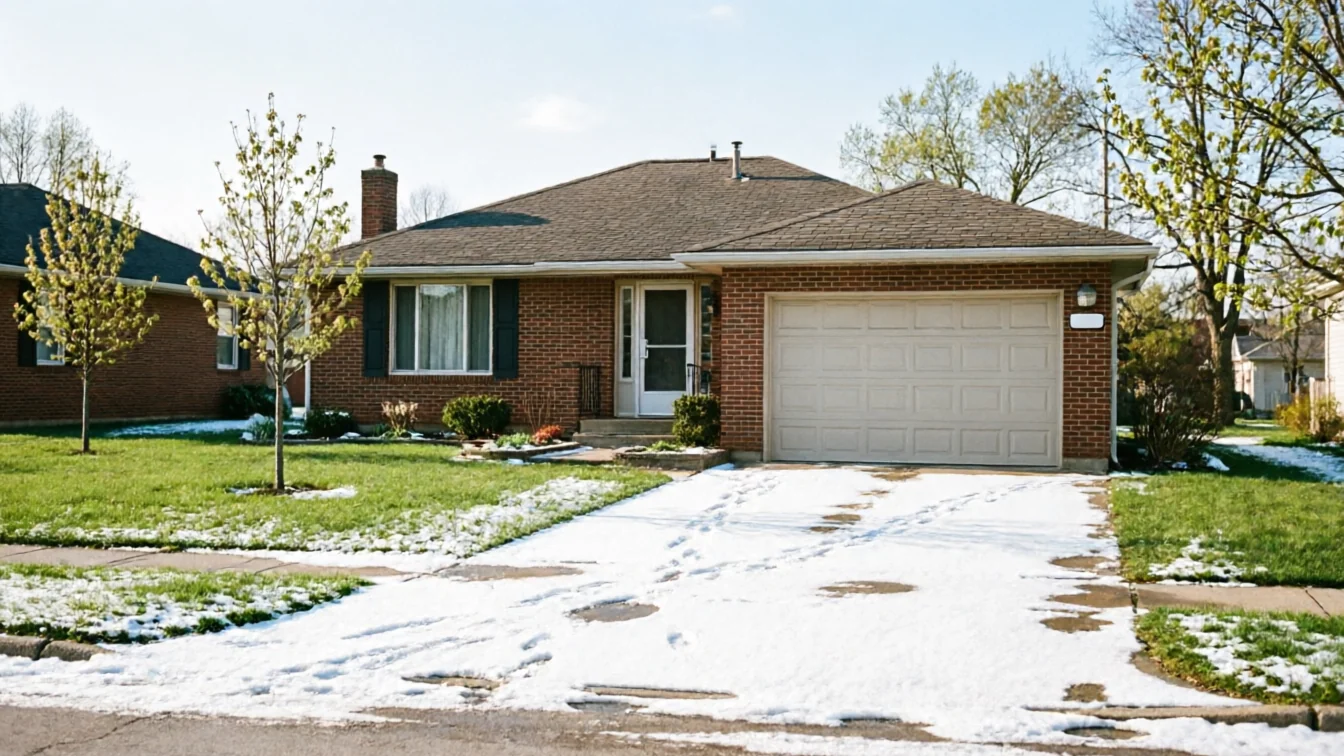
Ham Lake sits in a severe cold climate band, and that matters more to a torsion spring than most homeowners think. Steel loses flex as it gets cold, and a spring that's already fatigued from years of cycling can snap on the coldest mornings of the year instead of just wearing out gradually. The housing stock here runs mostly 1960 to 2003, with a median build year around 1984, which puts a lot of these springs at 20, 30, even 40 years of cold-weather cycling behind them.
A spring rated for a given door weight doesn't account for the extra drag that happens when grease inside the opener and on the tracks thickens up in low temperatures. That added resistance is often the last straw for a spring that was already marginal. On an older torsion setup - common across the 31 named areas in this service territory that share the same 1980s-90s build era - the spring is doing more work than it was sized for decades ago, before paint, dust, and temperature swings took their toll on the coil.
This isn't a defect in the door. It's just what happens to 25-to-60-year-old steel when it gets cold enough, often enough, for enough winters in a row.
When It Stops Being a DIY Job
A broken torsion spring on a double door is not a project for a ladder and a socket wrench. The spring is under enough stored tension to cause a serious injury, and cold steel is more likely to shatter than bend when it fails, which means sharper, faster-moving pieces. If the break happened overnight in freezing temperatures, do not assume the remaining tension in a paired spring is safe to work around - cold makes that coil behave less predictably, not more.
The honest limit here: if your door is original to a house built in the 1980s or earlier, and you've never had the spring replaced, we don't recommend trying to match it yourself. Parts on older torsion systems from that era aren't always a stock size, and guessing wrong on wire diameter or wind direction leaves you with a door that slams down or won't stay up. That's a call-us job, not a weekend one.
The Situation
If you own one of the 45,198 owner-occupied houses in this service area, odds are decent your garage door is original to a build year somewhere between 1960 and 2003. A door that age has usually been through thousands of open-close cycles, and the torsion spring absorbs almost all of that wear. Cold weather doesn't create the fatigue - it just picks the morning to expose it.
With a median household income of $100,011 across the area, most owners here aren't choosing between fixing a door and paying for groceries. The more common mistake is letting a noisy, slow, or hard-to-lift door go another winter because it still technically works. By the time it breaks on a 10-below morning with the car trapped inside, it's not a maintenance item anymore, it's an emergency.
What to Look At First
Before you call anyone, look at a few things. First, check whether the door is hard to lift by hand with the opener disconnected - a door that feels twice as heavy as it should is telling you the spring is already failing, cold weather or not. Second, look at the spring itself for a visible gap in the coil; a clean break usually leaves a clear separation you can see without touching anything.
Third, note how old the house is, if you know it. A door original to a home built in the 1960s, 70s, or 80s is a different repair than one on a house finished closer to 2003 - hardware sizing and mounting style changed over that stretch. Fourth, if the opener is straining and making a grinding noise but the door isn't moving, don't keep hitting the remote; repeated tries on a dead spring can bend the track or strip the opener's gears. Last, if this is happening in single-digit or sub-zero weather, treat the door as stuck shut rather than forcing it - cold steel under tension doesn't fail gently.
Frequently asked questions
Why do springs break more in winter here?
It's less about one cold snap and more about age. Most houses in this area were built between 1960 and 2003, so a lot of torsion springs are decades old. Cold steel flexes less, and that's often what pushes an already-fatigued spring past its breaking point on the coldest days.
Is it safe to replace a broken torsion spring myself?
No. The spring holds enough tension to cause serious injury, and in cold weather the steel is more likely to snap sharply than bend. This is especially true on older torsion setups common in houses built before the 2000s, where hardware may not match newer stock parts.
How do I know if my spring is original to the house?
If you haven't had it replaced and the house was built in the 1960s through 1990s, it's likely original or close to it. That's a long run of winters on one coil, and age is the biggest factor in when a spring fails, cold weather or not.
Related garage door services in Ham Lake
More garage door guides
Book garage door service in Ham Lake
Call now or request a quote - tell us what the door is doing and where you are.